Garage doors on the Treasure Coast
A garage door is the largest opening on most homes, which makes it a big part of hurricane protection. Tell us what is going on and we pass your request to one independent local garage door company.
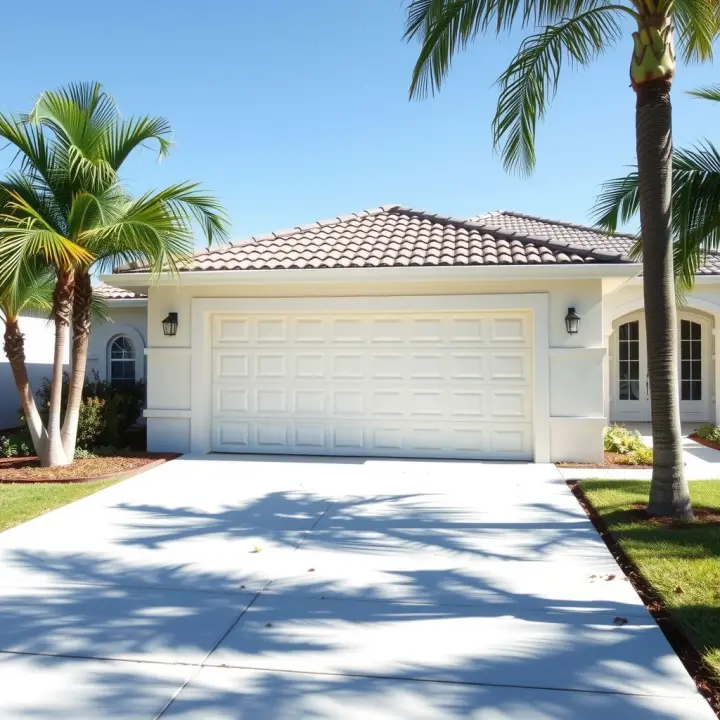
Most people think about a garage door only when it stops working. On the Treasure Coast it matters for another reason. In a hurricane, a door that fails lets wind into the house, and that pressure can damage the rest of the structure. That is why wind ratings, product approvals and permits come up so often with garage doors in Florida.
What usually goes wrong
- Broken springs. Springs carry most of the door's weight. When one snaps, the door feels very heavy and the opener may strain or stop. Springs are under high tension, so replacing them is dangerous without the right tools and training.
- Salt air corrosion. Near the ocean and lagoon, springs, cables, rollers, hinges and tracks rust faster. Rust shortens spring life and makes doors noisy.
- Opener failures. Openers fail from age, worn gears, or power surges from lightning. Safety sensors at the bottom of the tracks get bumped out of line or covered in dirt, which stops the door from closing.
- Damaged panels and bracing. Dents, bent sections and missing horizontal braces affect how the door holds up in wind.
- Storm damage. After a storm, a door may be pushed out of its tracks or bowed.
Repair or replace?
Springs, cables, rollers and openers are usually repairable. Replacement makes more sense when panels are damaged, the door is old and not rated for current wind loads, or you want insurance credit for opening protection. A newer wind rated door often has a label on it showing the product approval and design pressures. If yours has no label and looks original to an older house, ask the company whether it meets current requirements.
Some homeowners add a retrofit bracing kit instead of replacing the door. Whether that is allowed and whether it counts for insurance depends on the product and its approval, so ask.
Permits, approvals and HOAs
Replacing a garage door usually needs a building permit on the Treasure Coast, and the new door generally must meet the Florida Building Code wind requirements for your location, with Florida Product Approval or a Miami Dade Notice of Acceptance. Whether the installer needs a state contractor license or a local certificate varies by county and by the scope of work. HOAs often control style and color. Confirm with your city or county building department.
A wind mitigation inspection looks at all openings, including the garage door. If you are also protecting windows and entry doors, see hurricane shutters and impact windows.
What drives the cost
Repairs depend on the part, spring type and door size. Replacements depend on single or double width, wind rating, insulation, windows in the door, finish and the opener. Wind rated doors cost more than basic ones. Get written quotes that list the door's product approval, the spring type and the warranty.
What to ask and how to prepare
- Ask whether the new door is wind rated for your area and what its approval number is.
- Ask whether they pull the permit and whether removal of the old door is included.
- Take photos of the label inside the door, if it has one, and of any broken parts.
- If a spring is broken, leave the door closed and do not try to lift it.
Related pages: electrical work if the opener outlet or circuit is the problem, and painting to refresh the door and trim after.
Common questions
Can I replace a garage door spring myself?
It is not recommended. Garage door springs hold a lot of tension, and when they release suddenly they can cause serious injuries. Torsion springs above the door need special winding bars and training. If a spring breaks, leave the door closed, unplug the opener so it does not strain, and have a garage door company replace it. They often suggest replacing both springs at once.
Does my garage door need to be hurricane rated?
If you are replacing it, the new door generally has to meet current Florida Building Code wind requirements for your location, and a permit is usually required. Existing doors do not automatically have to be replaced. A rated door helps protect the house in a storm, and it can count toward insurance credits for opening protection. Ask your agent and a garage door company.
How do I know if my garage door is wind rated?
Many wind rated doors have a label, often on the inside of the door or on the track, showing the manufacturer, product approval and design pressures. If you cannot find one, check your permit history with the city or county, or ask a garage door company to look. Older doors without a label may not meet current requirements.
Why won't my garage door close all the way?
A common cause is the safety sensors near the floor. If they are out of alignment, dirty or blocked, the opener reverses the door. Check that both sensor lights are on and nothing is in the way. Other causes include a misadjusted close limit, a bent track or a broken spring. If the door looks uneven or heavy, stop using it and call for service.
Do I need a permit to replace my garage door?
In most Treasure Coast jurisdictions, yes. A garage door replacement usually needs a building permit and inspection, because the door is part of the home's wind protection. The installer normally pulls it. Who is allowed to install it, and with what license, can vary by county. Confirm with your city or county building department before work starts.