Lawn care and landscaping on the Treasure Coast
Grass grows fast here for most of the year, and sandy soil, summer rain and lawn pests make it a steady job. Tell us what you need and we pass your request to one independent local lawn care company.
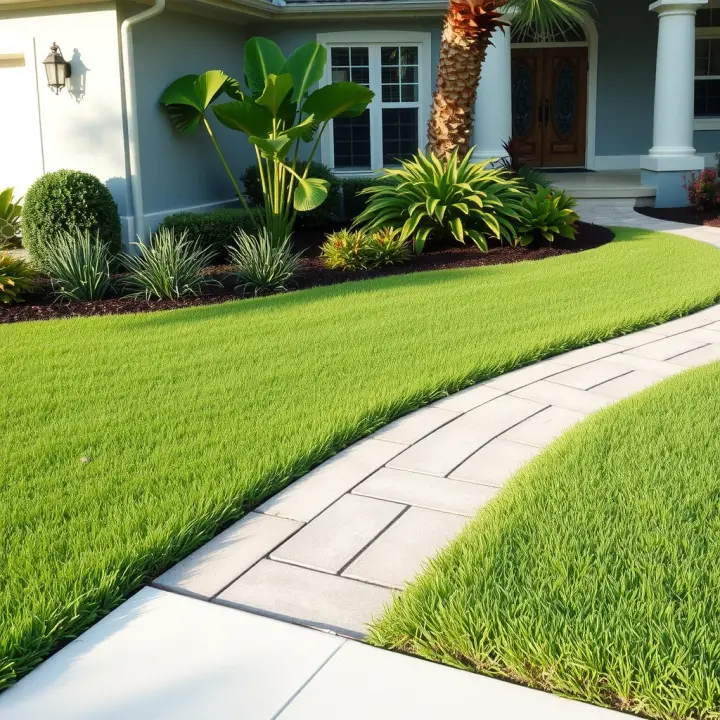
Most Treasure Coast lawns are St. Augustine grass, with some Bahia, Zoysia and other types mixed in. The growing season is long, the soil is mostly sand, and the summer brings heavy rain followed by hot sun. A lawn that looked good in March can have brown patches by July.
What goes wrong, and why
- Chinch bugs. These small insects feed on St. Augustine grass in hot, sunny spots and leave yellow and then brown patches that spread. They are often mistaken for drought.
- Fungus. In wet, warm weather, and with too much water or nitrogen, fungal diseases cause rings and patches.
- Sandy soil. Sand drains fast and holds few nutrients, so lawns dry out quickly and fertilizer washes through. That is also why runoff matters for the lagoon and rivers.
- Weeds. Thin turf lets weeds in. Mowing too short is a common cause.
- Irrigation problems. Broken heads, poor coverage and timers set for the wrong season waste water and stress grass. On well irrigation, iron can leave orange stains on walls and walks.
Rules that affect your lawn
Fertilizer. St. Lucie, Martin and Indian River counties, along with several cities, restrict nitrogen and phosphorus fertilizer during the summer rainy season, roughly June 1 through September 30. The goal is to keep nutrients out of the Indian River Lagoon and the rivers. Details vary, so confirm your local ordinance. A good lawn company plans its fertilizer schedule around these dates.
Watering. Lawn watering days and hours are set by your water management district and local rules, and they can change during dry periods. Ask the company to set your timer to match.
HOAs. Many communities have rules on grass type, edging, plant choices and how often lawns are cut. Check before changing sod or beds.
Digging. New beds, edging and irrigation work involve digging. Florida law requires calling 811 before you dig so buried lines get marked.
Maintain, renovate or resod?
If the lawn has thin spots but is mostly alive, adjusting mowing height, watering and treatment for pests or fungus often brings it back. If most of it is dead or full of weeds, replacing sod may be faster. Before resodding, ask what killed the old grass. New sod over the same problem fails the same way. Some homeowners replace part of the lawn with Florida friendly beds that need less water and mowing.
Licenses, cost and what to ask
Florida does not issue a state license for mowing and basic yard work. Applying fertilizer commercially requires an FDACS limited certification, and applying pesticides to lawns falls under FDACS pest control licensing. If a company treats for weeds or insects, ask which license covers it. Price depends on lot size, how often they visit, and whether treatments, edging, trimming and cleanup are included. Ask for a written list of what each visit includes, what treatments cost extra, and how they handle the summer fertilizer restrictions.
Related pages: tree service for large trees and palms, pest control for insects around the house, and fencing if you are redoing the yard.
Common questions
Why is my St. Augustine grass turning brown in summer?
Two common causes are chinch bugs and fungus. Chinch bugs usually show up as yellow patches in hot, sunny areas near pavement that spread outward. Fungus tends to appear as rings or patches in wet weather. Drought and irrigation problems can look similar. A lawn company can part the grass and check for insects, which helps avoid treating the wrong problem.
When can I fertilize my lawn on the Treasure Coast?
St. Lucie, Martin and Indian River counties, and several cities, restrict nitrogen and phosphorus fertilizer during the summer rainy season, roughly June 1 through September 30. Outside that window, fertilizer is usually allowed with limits on amount and type. The rules exist to protect the Indian River Lagoon and rivers. Confirm the exact local ordinance for your address, since details differ.
How short should I mow St. Augustine grass?
St. Augustine grass generally does better kept taller than many people think, often in the range of about three and a half to four inches, depending on the variety. Mowing it short stresses the grass, invites weeds and makes chinch bug damage worse. Sharp blades matter too. Ask the lawn company what height they set their mowers for your grass type.
Does a lawn company need a license in Florida?
Mowing and basic yard work do not require a state license, though your city or county may require a local business tax receipt. Companies that apply fertilizer need an FDACS limited fertilizer certification, and those that apply pesticides need FDACS pest control credentials. Ask which credentials they hold and what insurance they carry.
Is it better to repair my lawn or replace the sod?
If most of the grass is alive, fixing the cause and letting it fill in is usually cheaper. If most of it is dead or overrun with weeds, new sod can be faster. Either way, find out what caused the damage first, whether pests, fungus, shade or irrigation. Laying new sod over an unsolved problem often leads to the same result within a season.