Pool service and resurfacing on the Treasure Coast
Florida pools run all year, so equipment and surfaces wear faster than people expect. Tell us what your pool needs and we pass your request to one independent local pool company.
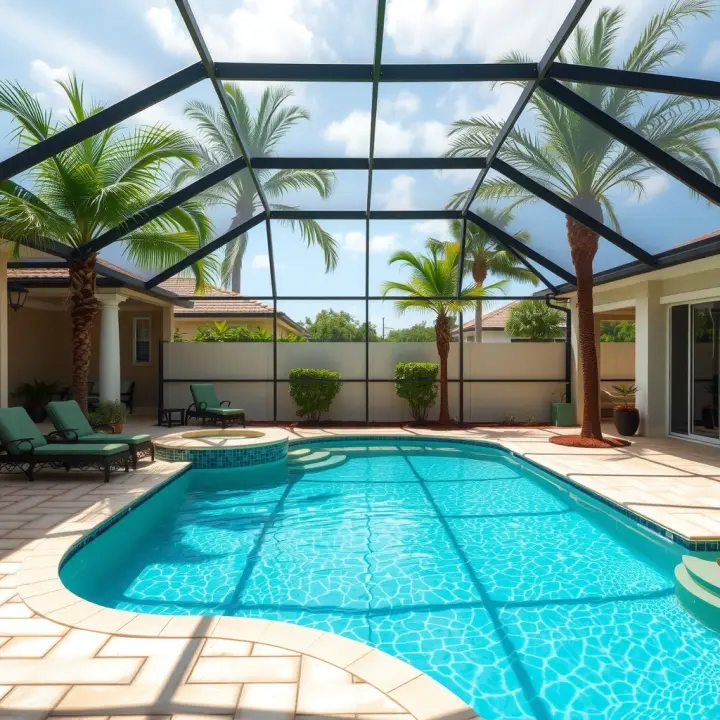
A backyard pool on the Treasure Coast deals with strong sun, heavy summer rain, leaves and pollen, and water chemistry that can swing quickly after a storm. Keeping it clear is a weekly job. Keeping the equipment and the surface in good shape is a longer game.
Common problems and why they happen
- Algae after storms. Heavy rain dilutes chlorine and changes pH, and warm water lets algae bloom within days. Pools often turn green right after a storm or a missed week.
- Scale on tile and surfaces. Hard fill water, especially from wells, leaves calcium deposits at the waterline and can roughen the surface over time.
- Worn plaster. Many pools here have a white plaster or marcite finish that gets rough, stained and etched over the years, especially if the chemistry runs off balance. Pebble and quartz finishes cost more and usually last longer.
- Equipment. Pumps run many hours a day, and heat, rain and salt air wear out motors, seals, timers and heaters. Lightning can damage controls.
- Leaks. A pool loses water to evaporation, and a lot of it in summer, but steady losses beyond that can mean a leak in the plumbing, the skimmer or the shell.
A warning about draining
Do not drain a pool on your own. With the high water table in much of the region, an empty pool can be pushed upward by groundwater and crack or even lift out of the ground. Pools have relief valves for this reason, but draining for resurfacing or repairs is a job for a pool company that plans around the water table and the weather.
Repair, resurface or remodel?
If the surface is rough on feet, stained or flaking, it is probably time to resurface. If the tile is falling off or the coping is loose, that work is often done at the same time, since the pool has to be drained anyway. For equipment, a single failed part like a motor or a seal is often worth replacing, while an old, inefficient pump may be better swapped for a variable speed model that uses less electricity. Ask for written quotes that separate each item so you can decide what to do now and what can wait.
What drives the cost
Weekly service usually depends on pool size, whether chemicals are included, and how many trees drop leaves into it. Resurfacing depends on the pool's size and shape, the finish you choose, and whether tile, coping or steps are part of the job. Equipment costs depend on the type and size. Prices vary a lot, so compare quotes for the same scope.
Licenses and permits
Florida has state licenses for pool and spa contractors, including certified (statewide) and registered (local) types and a servicing license. Resurfacing, structural repair, new equipment that ties into plumbing or electrical, and heaters usually fall under those licenses and often need a permit. Routine cleaning and chemical service do not require a state license. Many pool companies do both, so ask which license covers the specific work you want. Pool barrier rules apply too, which matters if you are changing a fence or screen around the pool. Confirm permit needs with your building department.
Before the visit
- Note the pool's rough size and how old the surface and equipment are.
- Take photos of the equipment pad, including labels.
- Tell them about any water loss and how fast it happens.
Related pages: pressure washing for pool decks and pavers, electrical work for pool equipment circuits, and water treatment if hard well water is your fill source.
Common questions
Why does my pool turn green after a storm?
Heavy rain dilutes the chlorine and shifts the pH, and debris brings in organic material that uses up what chlorine is left. In warm Florida water, algae can bloom within a day or two. Before a storm, many pool companies suggest bringing chlorine up and keeping the pump running when power allows. After it, clear debris, test the water and shock as needed.
Can I drain my pool myself?
It is risky here. Much of the Treasure Coast has a high water table, and an empty pool can be pushed up by groundwater pressure, which can crack the shell or lift the pool. Draining is usually done by a pool company that checks the water table, opens the relief valve, and plans the work to keep the pool empty for as short a time as possible.
How long does pool plaster last?
It varies with water chemistry, sun and how the pool was cared for. White plaster or marcite often lasts somewhere around 10 to 15 years before it gets rough, stained or etched. Pebble and quartz finishes usually cost more and tend to last longer. Keeping pH, alkalinity and calcium in balance is the main thing that extends the life of any finish.
Does a pool cleaning company need a license in Florida?
Routine cleaning and chemical service do not require a state license. Resurfacing, structural repairs and much of the equipment work fall under Florida pool and spa contractor licenses, and some of that work needs permits. Many companies do both cleaning and repairs. Ask which license covers the specific work you want and look it up on the state licensing site.
Should I switch to a variable speed pool pump?
Many owners do when the old pump fails. A variable speed pump can run at a lower speed for longer, which uses much less electricity for the same filtering. It costs more up front, and the savings depend on how many hours you run the pump and your electric rate. Ask the pool company to estimate the yearly difference for your pool.