Fencing on the Treasure Coast
A fence here has to handle sun, wind, salt air and sandy soil, and it often has to meet HOA and pool rules too. Tell us what you need and we pass your request to one independent local fence company.
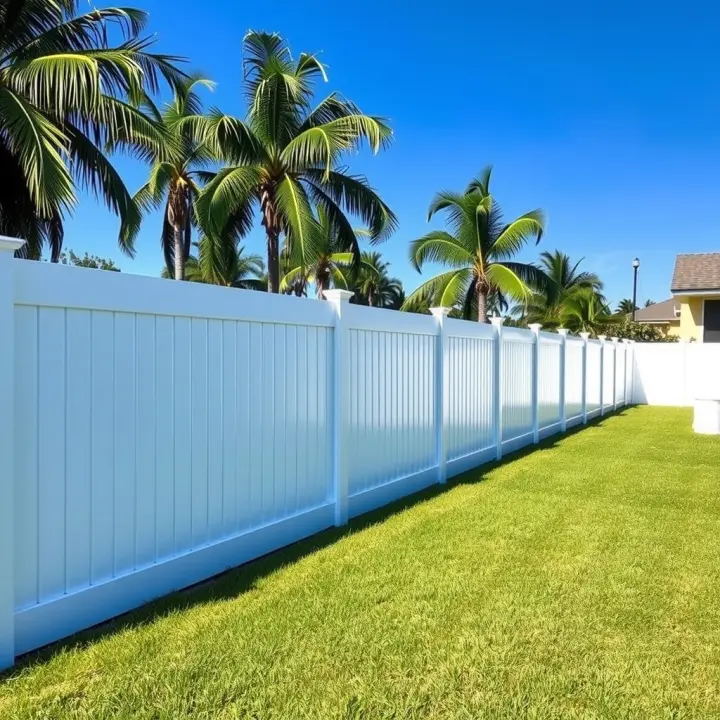
Treasure Coast homeowners put up fences for privacy, pets, pools and to mark property lines. The climate is hard on fences. Strong sun fades and weakens materials, humidity rots wood, salt air corrodes metal near the coast, and hurricane winds push on every panel. The soil is mostly sand, so how the posts are set matters a lot.
Choosing a material
- Vinyl (PVC). Very common here. It does not rot and needs little upkeep beyond cleaning off mildew. Quality varies, and cheaper vinyl can yellow or crack. Solid privacy panels catch a lot of wind.
- Aluminum. Popular around pools and near the water because it resists rust better than steel. It gives a clear view and lets wind through.
- Wood. Lower cost up front, but in our humidity it needs sealing or staining, and it can rot at the bottom and attract termites. Pressure treated posts help.
- Chain link. Affordable and durable for pets and back lots. Coated versions last longer near salt air.
Things that matter here
- Posts and wind. In sandy soil, posts are usually set in concrete, and the depth and spacing affect how the fence handles storms. Ask how deep they set posts and how far apart.
- Pool barriers. Florida has pool barrier rules for residential pools, covering things like fence height, gaps and self closing, self latching gates. If your fence is part of the pool barrier, it has to meet those rules. Ask the company and the permit office what applies.
- Property lines and easements. A survey shows where the line is. Utility and drainage easements may limit what you can build, and fences along canals or drainage areas can have special rules.
- HOAs. Many communities control fence height, style, color and placement. Get approval in writing before you sign.
- Digging. Florida law requires calling 811 before you dig, so buried utilities get marked before posts go in.
Repair or replace?
A few broken panels or a leaning post after a storm can often be repaired, especially with vinyl and aluminum, if matching parts are still made. If many posts are loose, wood is rotting at ground level, or the fence no longer meets pool barrier rules, replacement usually makes more sense.
Cost, permits and licensing
Fences are usually priced by the linear foot plus gates. Material, height, the number of corners and gates, removal of the old fence, and hard digging all change the price. Get written quotes for the same layout and material so you can compare.
Many cities and counties on the Treasure Coast require a permit for a new fence, and some ask for a survey showing where it will go. Florida doesn't issue a state license specifically for fence installation, though some counties require a local certificate of competency or registration. Ask for proof of liability insurance and the local business tax receipt, and confirm permit rules with your building department.
Related pages: pool service if the fence is part of a pool area, pressure washing to clean mildew off vinyl, and tree service if limbs are over the fence line.
Common questions
Do I need a permit for a fence on the Treasure Coast?
In many cases, yes. Most cities and counties on the Treasure Coast require a permit for a new fence, and some ask for a survey showing where it will go. Height limits, setbacks from roads and easements, and pool barrier rules can all apply. Your HOA may have separate approval. The fence company often handles the permit, but confirm with your local building department.
What kind of fence holds up in hurricanes?
No fence is storm proof, but open styles like aluminum picket or chain link let wind pass through and usually fare better than solid privacy panels, which act like a sail. For any style, post depth, concrete footings and spacing matter a lot in sandy soil. Ask the fence company how they set posts and whether the product has a wind rating.
What are the rules for a pool fence in Florida?
Florida has pool barrier rules for residential pools that cover things like minimum fence height, gaps, climbability and gates that self close and self latch. Local codes may add more. If your fence is part of the barrier around a pool, it needs to meet those rules. Ask the fence company and your building department what applies to your pool before you choose a design.
Can I put a fence on my property line?
Often, but check first. A survey shows where the line is, and the fence should usually sit on your side of it. Utility or drainage easements may limit fences or require a removable section, and fences near canals and drainage areas can have special rules. Your HOA may also control placement. Talk to your neighbor too, since disputes are much easier to avoid than fix.
Is vinyl or wood better for a Florida fence?
Vinyl usually lasts longer here with less maintenance, because it does not rot or attract termites, but it costs more up front and quality varies. Wood costs less, but humidity, rain and insects shorten its life unless it is sealed and maintained. Aluminum is a strong option near salt water or around pools. Compare written quotes on more than one material.