Water heaters on the Treasure Coast
A water heater usually fails at the worst time, and in Florida hard water often speeds that up. Tell us what is happening and we pass your request to one independent local plumber.
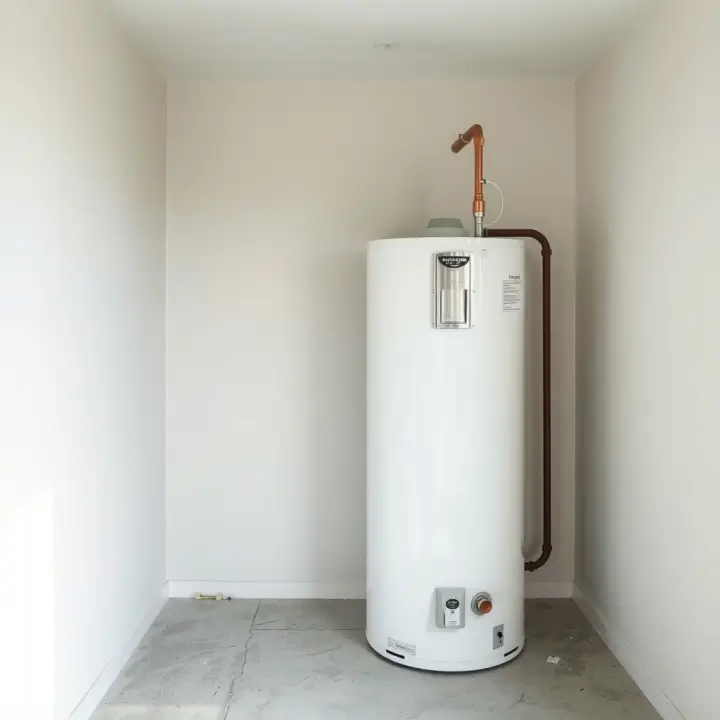
Most Treasure Coast homes have an electric tank water heater in the garage, a utility closet or sometimes an interior closet. Where it sits matters. A tank that leaks in the garage makes a puddle. A tank that leaks in an interior closet can ruin flooring and drywall and lead to mold.
Why water heaters fail here
- Hard water and sediment. Well water and some city water carry minerals that settle at the bottom of the tank. Sediment makes popping or rumbling noises, reduces hot water, and makes the tank work harder.
- Corrosion. Tanks have a sacrificial anode rod that corrodes so the tank does not. When the rod is used up, the tank itself starts to rust from the inside. Some well water speeds this up.
- Age. Many tanks last somewhere around 8 to 12 years, sometimes less with hard water. The manufacture date is usually coded in the serial number on the label.
- Electrical parts. On electric tanks, heating elements and thermostats fail. These are often fairly simple repairs on a tank that is otherwise in good shape.
Repair or replace?
If the tank itself is leaking, it needs to be replaced. Tanks cannot be patched. If the problem is an element, thermostat or valve on a tank that is not too old, a repair often makes sense. A tank near the end of its expected life with a failing part is usually a candidate for replacement, so you do not pay for a repair and then a new tank a year later.
Your options when replacing
- Standard electric tank. The most common and usually the least expensive to install.
- Heat pump water heater. It pulls heat from the surrounding air, which works well in a warm Florida garage. It costs more up front and uses much less electricity. It needs space and air around it, and it puts out cool air.
- Tankless. Gas tankless units need a gas supply. Electric tankless units for a whole house need a lot of electrical capacity and may need a panel upgrade. Hard water can scale them up without regular flushing or a softener.
- Solar. Some homes here use solar water heating. It depends on sun exposure, layout and budget, so ask for details if you are curious.
Cost drivers, permits and licenses
A like for like tank swap is usually the least expensive job. Changing type, moving the location, adding a drain pan and line, an expansion tank, new electrical work or gas piping all add cost. In most Treasure Coast jurisdictions, replacing a water heater needs a plumbing permit, and the work is done by a Florida licensed plumbing contractor. Confirm the local rule with your city or county building department. Get written quotes that say what is included, including haul away of the old tank.
Before the visit
- Take a photo of the label on the tank so the plumber knows the size, type and age.
- If it is leaking, turn off the power at the breaker (or the gas) and close the cold water valve above the tank.
- Clear space around the heater and note how it is reached, for example through a narrow closet door.
Related pages: plumbing for leaks and repiping, water softeners and filtration if hard water is shortening your water heater's life, and electrical work if a heat pump or tankless unit needs a new circuit.
Common questions
How long does a water heater last in Florida?
Many tank water heaters last somewhere around 8 to 12 years, but hard water can shorten that. Sediment and mineral scale make the tank work harder and speed up corrosion. Flushing the tank and checking the anode rod can help it last longer. The manufacture date is usually coded in the serial number on the label, and a plumber can read it for you.
Is a heat pump water heater a good choice here?
It can be, because it pulls heat from warm air and Florida garages are warm most of the year. Heat pump models cost more to buy and install, but they use a lot less electricity than a standard electric tank. They need enough space and airflow around them and work less well in a small closed closet. Ask the plumber whether your location suits one.
Do I need a permit to replace a water heater?
In most Treasure Coast jurisdictions, yes. Water heater replacement usually needs a plumbing permit and an inspection, which checks things like the relief valve discharge, the drain pan and the electrical or gas connection. The licensed plumber normally pulls it. Rules vary by city and county, so confirm with your local building department.
Why is my water heater making popping noises?
Popping or rumbling usually means sediment has built up at the bottom of the tank. Water trapped under the sediment boils as it heats, which makes the noise. It is common with hard well water. Flushing the tank can help if it has not gone too long. If the tank is older and noisy, a plumber may recommend planning for replacement.
What should I do if my water heater is leaking?
Turn off the power at the breaker for an electric heater, or set a gas heater to off. Then close the cold water supply valve, usually on the pipe above the tank. Put towels or a bucket down and move anything that can be damaged. If the leak is from the tank body itself, it will need to be replaced. If it is from a fitting or valve, it may be repairable.